
Awareness & Soft Skills
80% of the time with good situational awareness and soft skills, combined with the proper Self-Protection mindset you can avoid or prevent the threat scenario altogether.
Stage 03 · Self Defense Techniques
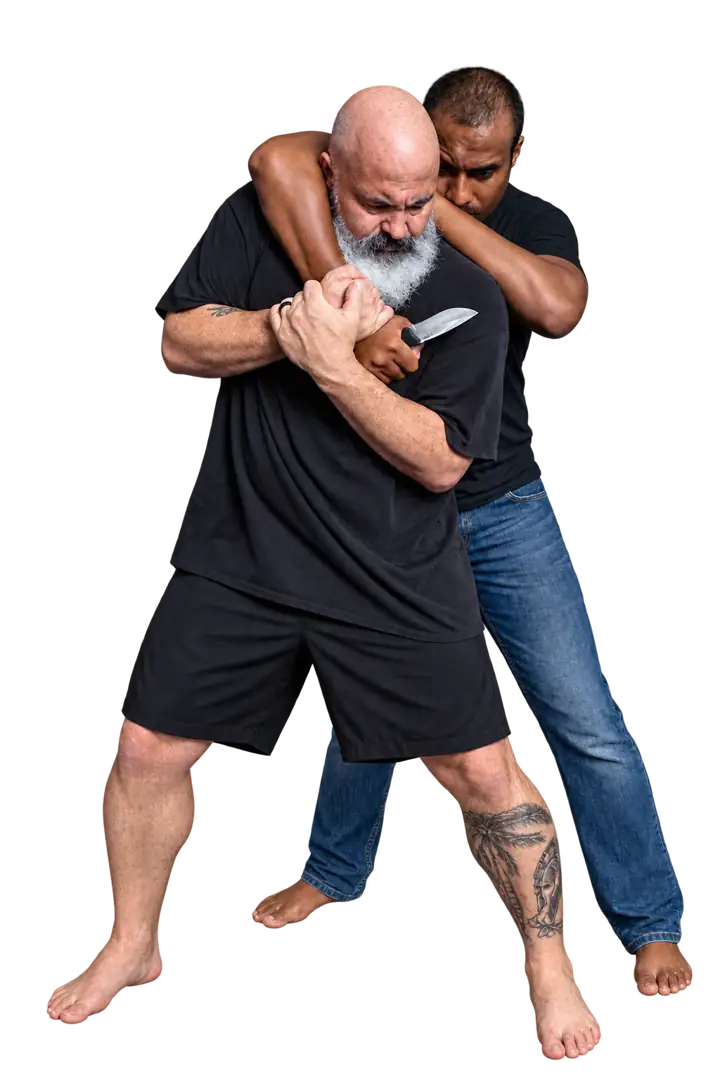
These are the physical techniques used to defend against specific threat scenarios.
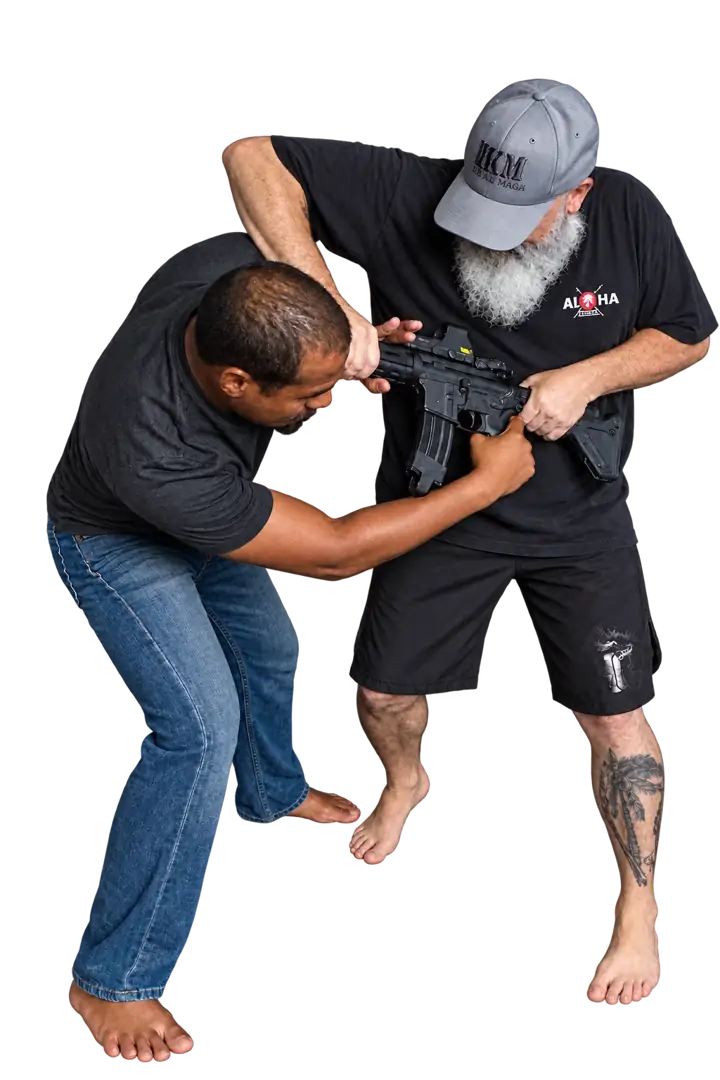
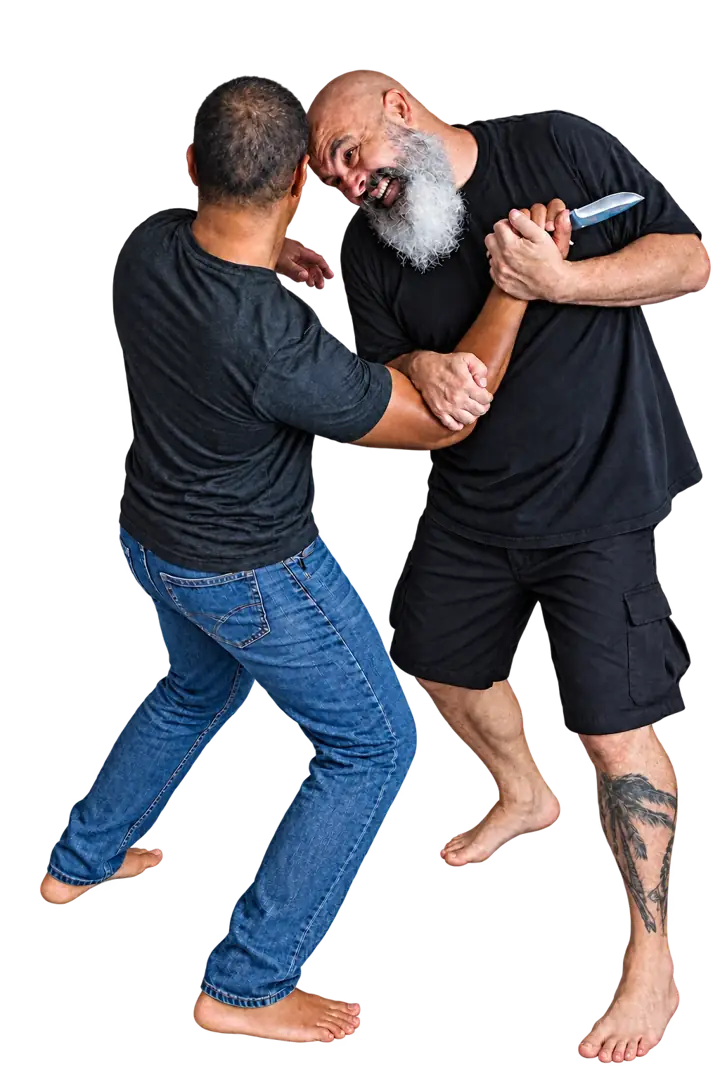
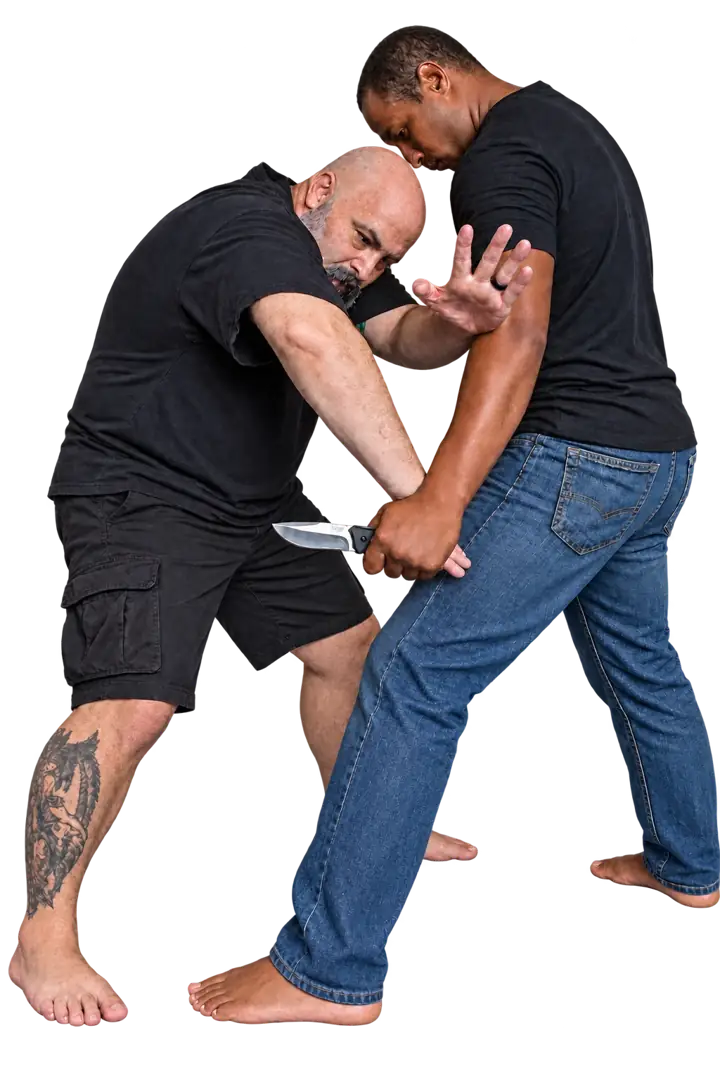
Hawaii Krav Maga categorizes threats into 4 basic categories. ALL threats you may face fall into one of these categories.
You could face multiple categories, by multiple attackers, at the same time, but it will always fall into these four categories.
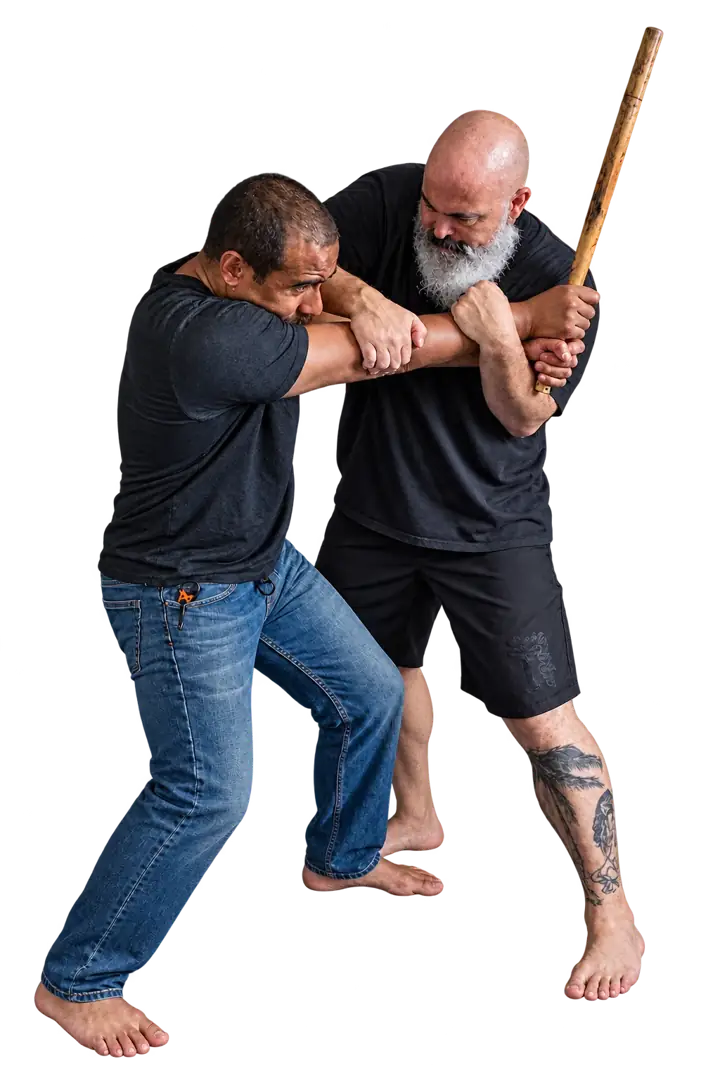
Self Defense Techniques
Impact, Blade and Firearm
Self-Defense or “Defensive Tactics” is an important component of Self-Protection, but it is just one part of a greater whole.
Proactive first · Reactive second
“How do you NOT get wet in the rain?”
I frequently ask new students, “How do you NOT get wet in the rain?” This question gives me insight into how they may look at Self-Protection.
Common answers are an umbrella or a raincoat. These are both good answers, but they only deal with one aspect of Self-Protection, and that’s Self-Defense.
Using the rain analogy I explain that the rain is violence, the umbrella and raincoat are Self-Defense, but one crucial Component is missing.
I simply ask, “Why didn’t you just turn on the weather report or look out your window before you went out?”
Don’t get me wrong you need to have a very effective umbrella and the raincoat, because sometimes you might get caught in the rain.
Self-Protection answers the question by approaching it proactively first and reactively second. We call this the 80/20.
Self-Protection mindset
80% of the time with good situational awareness and soft skills, combined with the proper Self-Protection mindset you can avoid or prevent the threat scenario altogether.
20% of the time you must be prepared to defend yourself by utilizing effective and efficient hard skills (Combatives and Defensive Tactics).